Contact Us


Belt Conveyor – Waste Material Belt Conveying Equipment
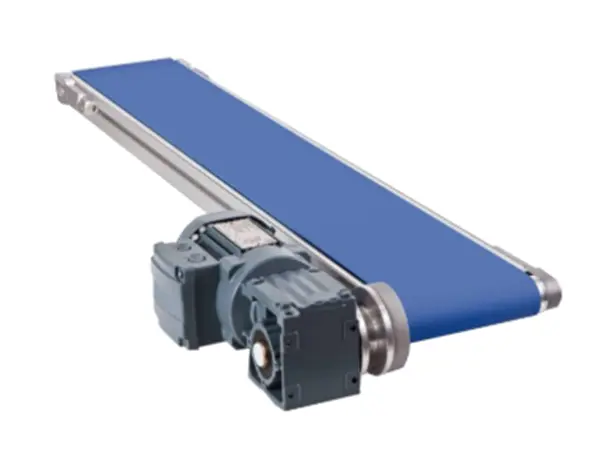
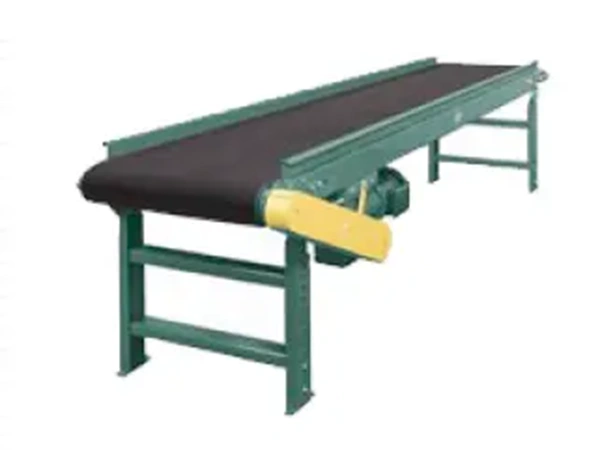
The waste belt conveyor, also known as a belt conveying system, plays a crucial role in waste processing lines. It is an economical material handling system that is indispensable for forming a continuous and organized production line.
The connection between major processing equipment and the transfer of materials throughout the system are completed through various conveying devices. With many years of experience and practical application, our company has developed a complete range of conveying equipment with different specifications. These systems can efficiently connect each stage of the process—from the previous process to the next. In addition, customized conveying equipment can also be designed and manufactured according to specific process requirements.
Performance Advantages of Belt Conveyors:
- Smooth conveying operation with low noise and strong conveying capacity.
- Low energy consumption, simple structure, and easy maintenance.
- Conveyor length can be customized according to user requirements.
- Suitable for long-distance conveying with low energy consumption and operating costs.
- Standardized components allow conveyors to operate individually or be combined into multiple conveyor systems according to process requirements.
- Long conveying distance and large conveying capacity, suitable for transporting granular, powdery, small lump materials, and bagged materials such as crushed stone, fertilizers, cement, coal, etc.
Chain Conveyor
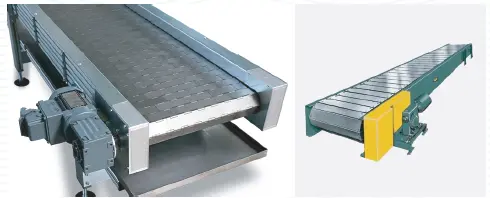
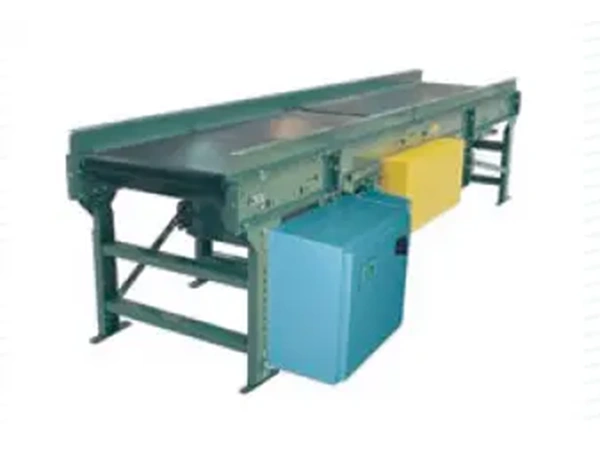
Apron Chain Conveyor – Waste Plate Chain Feeding ConveyorThe apron chain conveyor offers advantages such as high load capacity, high strength, strong wear resistance, and large conveying capacity. In waste sorting and processing production lines, apron chain conveyors are commonly used to transport materials such as construction and demolition waste. They are also widely used in sand and gravel plants, mines, solid waste treatment facilities, and other industrial applications.
The apron chain conveyor is mainly composed of a power unit (motor), drive shaft, drum, tensioning device, sprockets, chains, bearings, lubricants, and steel plates. High standards are required for component quality and assembly precision.
The two primary components responsible for material conveying are:
- Chains, which provide traction through continuous circulating motion.
- Metal plates, which act as the load-bearing carriers during the conveying process.
The working principle involves a series of chains fixed to the traction chain to provide pulling force, while metal plates serve as the carrying surface to move materials horizontally or along an inclined direction. To meet various requirements in waste sorting production sites, the conveyor equipment used in automated lines can be specifically designed and customized to achieve the desired operational goals.
Performance Features of the Waste Plate Chain Feeding Conveyor:
- Capable of conveying large materials with sharp edges, highly abrasive materials, materials with temperatures below 400 °C, and high-moisture materials.
- The conveyor can be driven from either the left or right side and can transport materials horizontally or at an incline, with an inclination angle between 0–30°, depending on site requirements.
- Fully automated operation without the need for manual handling.
- High-strength traction chains allow long-distance conveying.
- Chain plates provide high bending strength and strong impact resistance, ensuring stable operation with low noise.
- PLC-controlled speed settings enable precise material feeding and measurement, ensuring continuous, uniform, and steady material supply.