Contact Us


Bar Screen / Aged Municipal Solid Waste Bar Screening Equipment
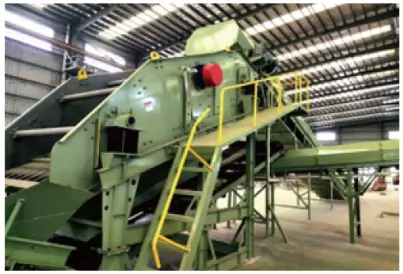
The bar screen for aged municipal solid waste adopts a dual eccentric shaft vibration exciter, enabling it to withstand the impact of large falling materials. It offers high screening capacity and can effectively separate and discharge block-shaped and granular materials during the production process.
The specially designed grate bars prevent material clogging, and the bar spacing is adjustable to meet different waste classification requirements. The equipment is particularly suitable for the pre-treatment of aged municipal solid waste, allowing easy separation of soft, easily entangled materials and large hard materials.
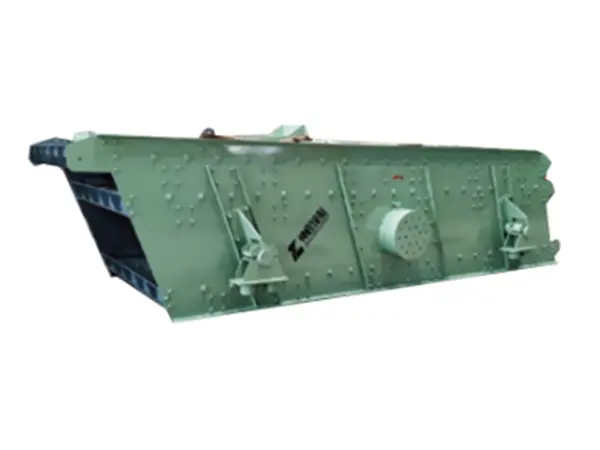
FMT Portal-Type Bar Screen for Aged Municipal Solid Waste Treatment
The FMT portal-type bar screen used in aged municipal solid waste treatment consists of portal-shaped bars, bar slots, a vibrating frame, vibration exciters, chute plates, discharge outlets, and guide chutes.
Structural Features:
- The portal-type bar is an integral gate-shaped structure composed of two vertical support bars and one cross beam. The cross beam serves as the material-receiving screening surface.
- The vibrating frame is a rectangular structure installed at an inclined angle, with side plates positioned higher than the screening surface to prevent material overflow.
- Multiple sets of bar slots are arranged on the vibrating frame. The bars are securely fixed into these slots to form an integrated portal-type bar screen framework.
- The bar screen support height ranges from 400–1000 mm.
- The higher end of the portal-type bar screen functions as the feed section, which is equipped with an inclined primary chute plate. The lowest point of this chute plate is positioned above the screening surface.
- A discharge outlet is installed beneath the vibrating frame, and a guide chute is arranged at the bottom of the discharge outlet to ensure smooth material flow.
- The portal-type bars are designed as an integral rectangular gate structure with a wide cross-section and high structural strength, allowing the manufacture of longer screening surfaces.
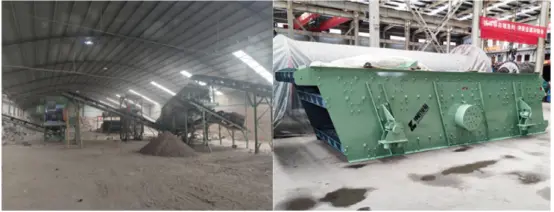
FMT Portal-Type Bar Screen for Aged Municipal Solid Waste Treatment The FMT bar screening equipment for aged municipal solid waste treatment is a portal- type bar screen system consisting of portal bars, bar slots, a vibrating frame, vibration exciters, chute plates, discharge outlets, and guide chutes. The portal bar is an integral gate-shaped structure composed of two vertical support bars and one cross beam. The cross beam serves as the material-receiving screening surface. The vibrating frame is a rectangular structure installed at an inclined angle. Both sides are equipped with side plates positioned higher than the screening surface to prevent material overflow.
Multiple sets of bar slots are arranged on the vibrating frame. The bar supports are fixed into these slots, forming an integrated portal-type bar screen framework. The support height of the bar screen ranges from 400–1000 mm. The higher end of the portal-type bar screen functions as the feed section, which is equipped with an inclined primary chute plate. The lowest point of this chute plate is positioned above the screening surface. A discharge outlet is installed beneath the vibrating frame, and a guide chute is arranged at the bottom of the discharge outlet to ensure smooth material flow. The portal bar is designed as an integral rectangular gate-shaped structure with a wide cross-section and high structural strength, allowing the manufacture of longer screening surfaces.
Structural Design Details
- Portal Bar:
The portal bar consists of two support bars and one cross beam forming a gate-shaped integral structure. The cross beam functions as the screening surface. The top surface of the cross beam is flat, with a cross-sectional width of 2–8 cm.
- Vibrating Frame:
The vibrating frame is a rectangular structure installed at an incline. Both sides are equipped with side plates higher than the screening surface.
- Bar Slots:
The bar slots are evenly arranged along two opposite sides of the vibrating frame and are fixedly connected to the frame. The vibration exciter is connected to the vibrating frame. The two support ends of the portal bar are movably connected to the corresponding bar slots on both sides of the vibrating frame.
- Fixing Structure:
Both the ends of the bar supports and the bar slots are provided with fixing holes of identical diameter. Bolts pass through these fixing holes to secure the components together, forming the main structure of the portal-type bar screen.
- Width Adjustment Modules:
Several width-adjustment modules are installed within the bar slots. These modules are positioned between the support ends of the portal bar and the bar slots. Each module is provided with fixing holes of the same diameter as those of the bar slots. The thickness of the width-adjustment modules is available in three specifications: 1 cm, 2 cm, and 3 cm, allowing flexible adjustment of the bar spacing.
- Contact Surface Design:
The contact surfaces between the portal bar, width-adjustment modules, and bar slots are designed as rough friction surfaces to enhance structural stability and prevent slipping.