 Contact Us


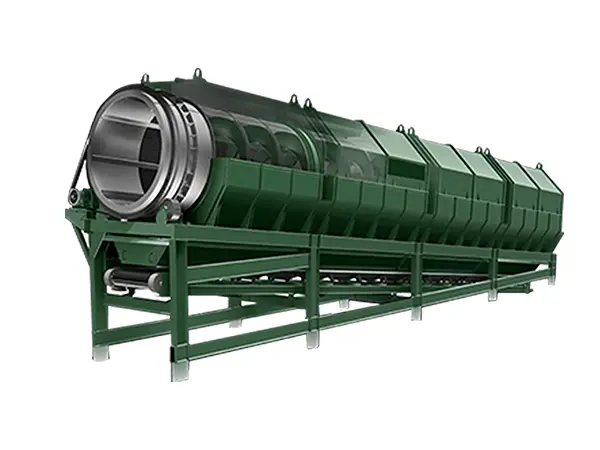
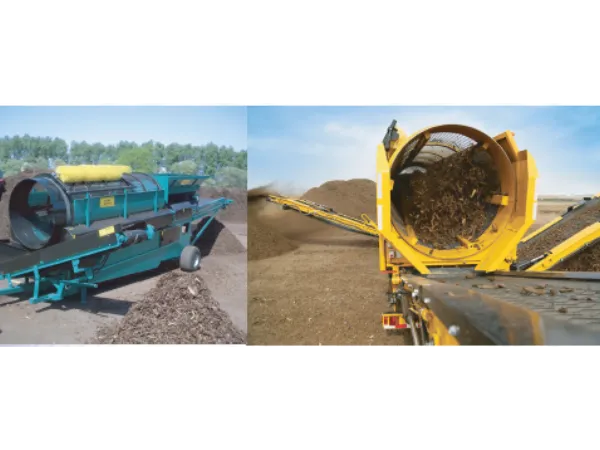


The rotating trommel screen used in municipal solid waste (MSW) sorting lines is typically installed at the upstream section of the waste separation system. It effectively screens urban solid waste by size and divides the incoming waste stream into two or multiple output fractions.
Based on particle size differences in waste components, the trommel screen separates materials accordingly. The equipment can be designed with a cylindrical drum or an internal hexagonal drum configuration. The interior may be equipped with a preliminary bag-breaking function and features a self-cleaning design.
Screening Principle
The trommel screen classifies waste through perforations in the rotating drum. Different hole sizes separate different material fractions, for example:
- < 80 mm: Sand, crushed glass, ceramics, stones, and other inert materials
- 80–200 mm: Recyclable plastics
- 200–300 mm: Paper and large plastic items
Materials smaller than the screen aperture fall through to the bottom of the machine, while larger materials move forward along the drum’s rotation and are discharged through designated outlets, improving downstream handling and environmental conditions.
Structure and Design
The trommel screen consists of a robust steel frame (section steel construction) and a rotating drum shell. The drum is equipped with dedicated guide plates for feeding, residue discharge, and screening sections. A protective cover prevents dust emissions and allows connection to an on-site dust collection system.
The center of the screen is the rotating drum body, constructed from steel plates and structural steel. The drum is welded and fitted with running rings for guidance and support. It is driven by friction wheels, ensuring quiet operation and reducing wear on the running rings.
Drive and Support System
All drive wheels, support rollers, and guide wheels are coated with protective plastic layers to ensure smooth operation even at higher rotational speeds and to extend service life.
- Two wheels serve as drive wheels equipped with gear motors
- The other two wheels function as free-rotating support wheels
All support rollers are arranged in series. Wheel diameters range from 300 mm to 500 mm, with an approximate width of 140 mm.
The drum is axially guided between axial guide wheels similar to the main wheels and fitted with plastic-coated running rings. High-quality main support bearings of appropriate size ensure long service life and reliable screening performance.
Performance Features of the Waste Trommel Screen
- Utilizes a rolling conveying principle, resulting in a low friction coefficient, minimal wear, and screen apertures that are resistant to clogging.
- The drum support adopts an integrated through-shaft structure, ensuring smooth operation with low vibration and low noise levels.
- Internal drum screen components feature a modular design, providing a simple structure and allowing fast and convenient replacement and maintenance.
- The drum body is designed with an effective fully enclosed structure, preventing dust emission and environmental pollution.
- Reliable operation with a reduction drive system, offering high transmission efficiency, low installed power, reduced energy consumption, and significant energy-saving performance.
- Screen mesh material and aperture size can be customized according to customer requirements, delivering high screening efficiency, long service life, and low maintenance costs.


