 Contact Us

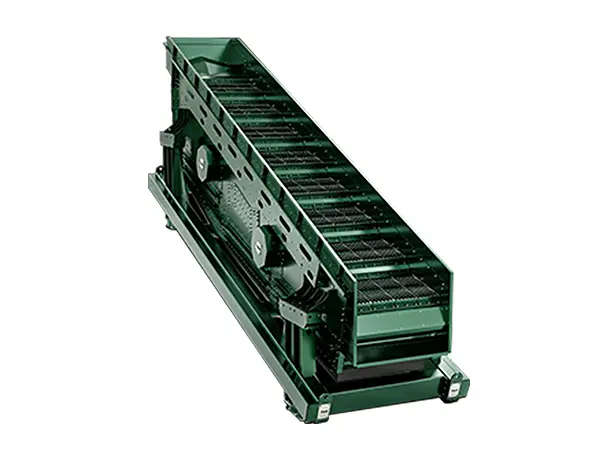
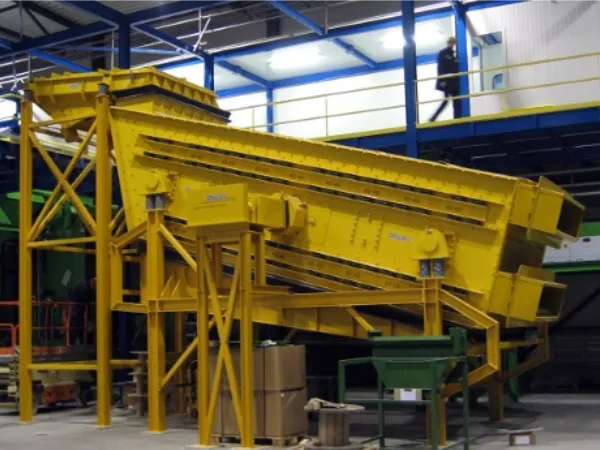


The jumping screen separator is a newly developed screening machine specifically designed for waste sorting and processing. Its operating principle is based on the differences in size, density, and shape of the materials being sorted. As materials move along or collide with an inclined surface, they exhibit different movement speeds and bouncing trajectories, allowing effective separation.
This equipment is commonly used for sorting municipal solid waste, pre-sorted renovation waste, dewatered kitchen waste, and paper recycling materials. The bouncing screen is the core component of the jumping separator, providing the inclined surface required for impact and rebound. Two high-power fans are installed to separate light materials such as plastic bags and other lightweight waste streams.
Equipment Features and Working Principle
The jumping screen separator is designed to separate inorganic particles from waste that has undergone primary crushing. By utilizing the physical characteristics of crushed waste materials, the system performs separation based on differences in specific gravity once the material reaches a certain particle size.
The equipment incorporates a bouncing separation function that enables inorganic particles or other rigid materials to rebound and separate while the main material stream continues to move forward. The separated particles travel in the opposite direction of the conveyed material, thereby achieving efficient sorting.
Application in Construction and Renovation Waste Processing
The jumping screen is a critical component in the sorting process of renovation (decoration) waste and mixed construction and renovation waste. When combined with
other crushing and sorting systems, the jumping screen enables the separation ofwaste into four main categories:
- Construction material fraction (further processed into sub-base materials or recycled aggregates)
- Combustible materials
- Recyclable materials
- Sand and soil fraction
Process Description
Step 1:
Municipal solid waste is first subjected to coarse sorting by a jumping screen
separator, dividing the waste into three categories:
- 2D flat materials, such as plastic films, packaging bags, and waste paper
- 3D bulky materials, such as bottles, cans, and boxes
- Fine-sized materials, such as sand, stones, and organic matter
Step 2:
Sensors are then used for illumination and identification based on color (e.g. near-infrared), material properties (e.g. inert materials), visible light, and laser technology. enabling precise secondary sorting of the three material streams.Through one or multiple combinations of this “golden pairing”, mixed municipal waste can be finely sorted into PP films, PE/PP/PS plastics, PET bottles, mixed paper, RDF, and organic materials.
Application Range
- Sorting of combustible waste, recyclable waste, and landfill (backfill) waste
- Sorting of glass bottles and ceramics
- Separation of plastic packaging from films or waste paper
- Removal of inert impurities smaller than 10 mm
Sorted Material Fractions
- Flat and lightweight 2D materials: films, paper, cardboard, textiles, and fibrous materials
- Fine fragments: materials separated according to the paddle-shaped perforation size and diameter
- Rolling and heavier 3D materials: plastic containers, bottles, stones, wood, cans, and metal materials
Equipment Advantages and Features
- Large screen deck with high processing capacity
- Stable and durable crankshaft design
- Fully enclosed dust-proof structure
- Removable screen deck for easy replacement
- Adjustable screen deck angle for flexible operation


